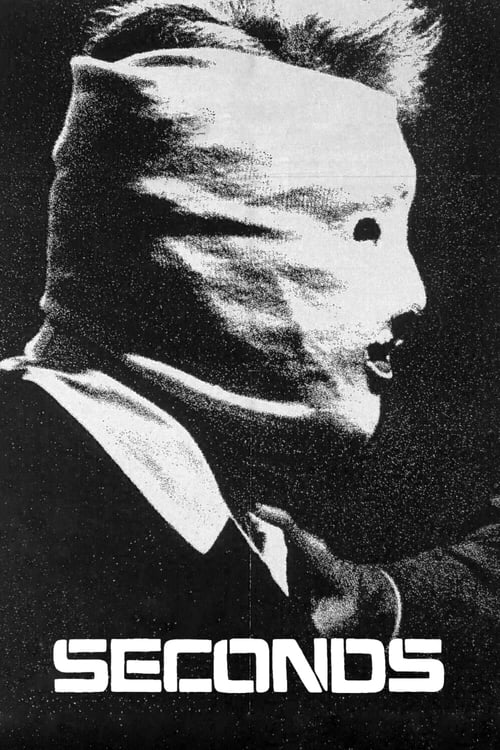
1. Seconds
John Frankenheimer's 1966 film remains a chilling exploration of identity and the American dream's darker side. Rock Hudson, usually the epitome of Hollywood glamour, delivers a haunting performance as a man who undergoes a radical physical and social transformation. The stark black and white cinematography, combined with an unnerving sense of paranoia, elevates this psychological thriller beyond mere genre fare. It’s a profound, unsettling meditation on conformity and the terrifying cost of escaping one's past.

2. The Man Who Fell to Earth
Nicolas Roeg's 1976 cinematic odyssey is less a traditional narrative and more a kaleidoscopic experience. David Bowie, in his iconic debut as an alien visitor, perfectly embodies the film's themes of alienation and destructive human consumption. Roeg's fragmented editing and surreal visuals create an intoxicating, dreamlike atmosphere, rendering Earth as beautiful yet corrupting. It’s a poignant, often disturbing reflection on humanity’s capacity for exploitation, presented through an outsider's melancholic gaze.

3. Jacob's Ladder
Adrian Lyne’s 1990 psychological horror film is a visceral descent into a veteran's post-traumatic nightmare. Tim Robbins portrays Jacob Singer, whose fragmented reality is plagued by terrifying, demonic visions that blur the lines between memory, hallucination, and infernal truth. The film masterfully exploits anxieties surrounding the Vietnam War and government conspiracies, creating an unsettling atmosphere of dread. It’s an unflinching, often disturbing, exploration of trauma and the fragility of the human mind.

4. Perfect Blue
Satoshi Kon's 1998 animated psychological thriller is a masterclass in blurring reality. Following an idol's transition to acting, the film delves into the perils of celebrity, obsession, and fractured identity. Kon brilliantly employs editing and mise-en-scène to disorient, making the audience question what is real alongside its protagonist, Mima. Its unflinching look at voyeurism and the dark underbelly of fame profoundly influenced later live-action thrillers, cementing its legacy as a groundbreaking work.

5. Dark City
Alex Proyas’s 1998 neo-noir science fiction opus stands as a testament to atmospheric world-building. With its perpetual night and shifting architecture, the film creates a suffocating, labyrinthine urban landscape where memory itself is a construct. It poses profound questions about free will, identity, and the nature of reality, themes later explored in *The Matrix*. Proyas crafts a visually arresting and intellectually stimulating experience, a true cult classic of philosophical sci-fi.

6. Primer
Shane Carruth's 2004 debut is a remarkably cerebral and low-budget independent film that redefines time travel. Eschewing spectacle for scientific rigor, it meticulously details the accidental discovery of a temporal loop device by two engineers. Its dense dialogue and non-linear structure demand close attention, rewarding viewers with a complex, ethically fraught narrative. *Primer* is a testament to ingenious storytelling, proving that profound science fiction doesn't require massive budgets.