#1
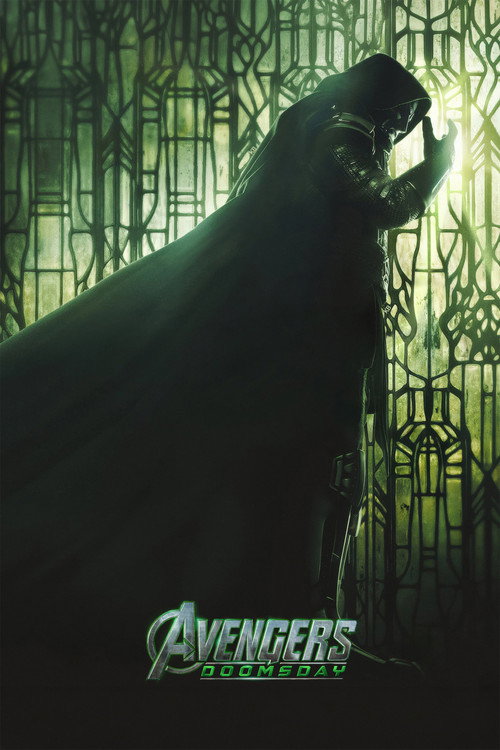
Avengers: Doomsday
Mark your tracking boards for December 16, 2026. The official premise hinges on heroes across three separate realities crashing into one another against an unprecedented existential threat. That tripartite universe mechanic demands your attention immediately. Multiversal incursions usually settle for binary parallel-world dynamics, so mapping three overlapping canonical branches requires rigorous structural charting. For anyone cataloging timeline branching rules before the December debut, this upcoming convergence represents the absolute peak of multiversal collision theory.
#2
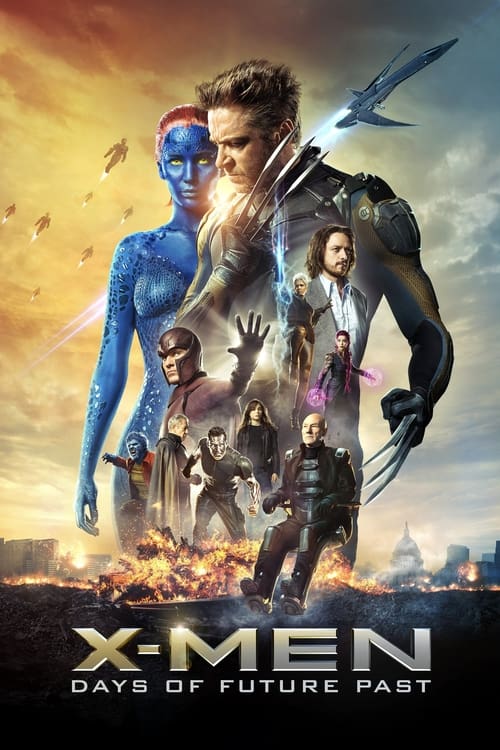
X-Men: Days of Future Past
Fox's messy continuity finally weaponized its own timeline errors here. Sending Logan’s consciousness back to 1973 exploited Kitty Pryde’s secondary phasing mutation to perform a direct timeline overwrite. Watch the Paris Peace Accords sequence closely; Mystique leaving her blood on the pavement establishes the precise causal pivot point for the Sentinel program. By pulling off an in-universe continuity scrub, the film retroactively invalidated The Last Stand while creating an entirely fresh, divergent branch for the franchise.
#3

Justice League: The Flashpoint Paradox
Barry Allen saving his mother triggered a temporal sonic boom rippling outward in both temporal directions. That displacement mechanic explains why Bruce Wayne died in Crime Alley instead of his parents, turning Thomas Wayne into an unhinged, lethal Batman. The brutal war between Atlantis and Themyscira represents pure causal fallout. Notice how Eobard Thawne explains temporal mechanics during the climax: pulling a single thread snaps the entire localized timeline into a fractured, hyper-violent dystopia.
#4

Everything Everywhere All at Once
The Daniels built their multiverse on branching micro-decisions and statistical improbability. Verse jumping requires deliberate absurdities to align neural pathways with adjacent reality shards, which grounds the chaotic jumps in consistent mechanical logic. Jobu Tupaki’s everything bagel serves as a physical black hole created by infinite sensory overload. Look at the tax audit scene where Evelyn first glimpses alternative pathways through broken office clutter; the visual foreshadowing maps out her entire multiversal sensory collapse minutes before it happens.
4 critics · 122 lists →
#5

Superman: Red Son
A slight twelve-hour rotational shift of the Earth lands Kal-El’s pod in a 1938 Ukrainian collective farm instead of Smallville. This animated adaptation tracks how a singular geopolitical variable completely rewires twenty-first-century global power structures. Superman becomes state-sanctioned muscle for Stalin, which forces Lex Luthor into an American strategic savior role. Watch how the film mirrors the main DC universe through inverted propaganda motifs, proving how deeply environment dictates moral alignment across divergent timelines.
#6
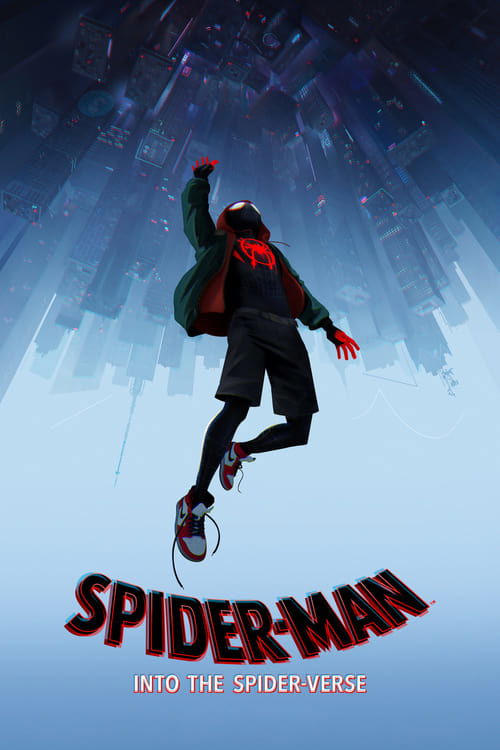
Spider-Man: Into the Spider-Verse
Kingpin's super-collider punches holes through the multiverse by exploiting quantum entanglement, pulling six distinct dimensional anomalies into Earth-1610. The brilliant lore detail here is cellular decay: displaced variants glitch because their molecular structures reject foreign reality matrices. Notice the deliberate frame-rate contrast during Miles and Peter B. Parker's training sequences. Miles animates on the twos while Peter moves on the ones, visually encoding developmental divergence right into the physical presentation of their timeline mechanics.
4 critics · 42 lists →
0 / 6